
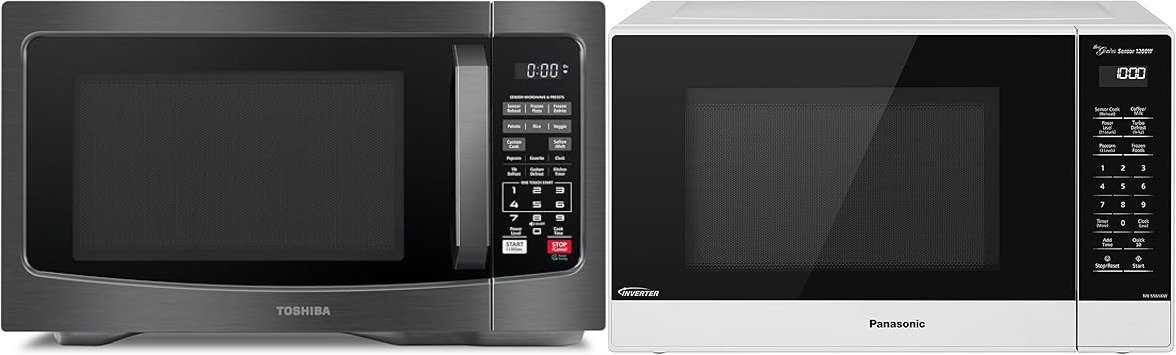
When it comes to choosing a reliable, high-performing microwave oven, two names dominate the kitchen appliance world — Toshiba and Panasonic. Both brands are known for innovation, durability, and performance. However, if you’re shopping for the best microwave in 2025, the key question remains: Toshiba vs Panasonic Microwave — which one should you buy?
In this detailed 2000-word guide, we’ll explore the features, power, design, technology, and price comparisons between the Toshiba EM131A5C-BS and the Panasonic NN-SN65KB (or similar compact inverter models). By the end of this article, you’ll know the main difference between these two market-leading brands and which one best fits your cooking needs.
Main Difference Between Toshiba and Panasonic Microwave
The main difference between Toshiba and Panasonic microwaves lies in their core cooking technology and performance style. Toshiba focuses on smart sensor cooking, durable design, and affordability, making it perfect for everyday use and family kitchens. Panasonic, on the other hand, utilizes its unique Inverter Technology that delivers consistent heat levels for evenly cooked food, catering to users who want precision and faster cooking results.
Simply put, Toshiba microwaves are more budget-friendly and user-friendly, while Panasonic microwaves offer professional-grade performance ideal for those who frequently cook or reheat complex dishes.

Feature Overview: Toshiba EM131A5C-BS Microwave Oven
The Toshiba EM131A5C-BS is one of the best-selling countertop microwaves, known for its sturdy stainless-steel build, intuitive digital control panel, and reliable performance. It offers an excellent balance between power, design, and affordability — making it a favorite among homeowners and college students alike.
- Model: Toshiba EM131A5C-BS
- Capacity: 1.2 cubic feet – spacious enough for family-size meals
- Power: 1100 watts for fast and even cooking
- Smart Sensor: Automatically adjusts cooking time and temperature
- Eco Mode: Reduces power consumption when not in use
- Control Panel: Easy-to-read digital display with pre-programmed buttons
- Design: Sleek black stainless steel finish
- Functions: Sensor reheat, defrost, popcorn, pizza, vegetables, and more
- Turntable Size: 12.4 inches
- Weight: 34.6 lbs
Toshiba’s smart sensor technology is one of its standout features. It detects humidity levels in the food and automatically adjusts cooking time for perfect results — no more overcooked edges or cold centers. The 1.2 cu. ft. capacity makes it ideal for medium-sized families, and its compact footprint fits easily on most countertops.
Feature Overview: Panasonic NN-SN65KB (Comparable to NN-SN67HS / NN-SN686S)
Panasonic’s compact microwave lineup, such as the NN-SN65KB, is renowned for incorporating Inverter Technology — a feature that sets it apart from most competitors. Instead of cycling power on and off like traditional microwaves, it provides a steady, precise stream of energy that ensures food cooks evenly from edge to center.
- Model: Panasonic NN-SN65KB (or NN-SN67HS)
- Capacity: 1.2 cubic feet
- Power: 1200 watts (higher cooking power than Toshiba)
- Technology: Inverter Technology for consistent heating
- Turbo Defrost: Faster, more uniform defrosting
- Sensor Cooking: Automatically adjusts cooking times
- Control Panel: Touchpad with quick preset options
- Design: Black stainless-steel finish with sleek handle
- Turntable Size: 13.4 inches (slightly larger than Toshiba)
- Weight: 29.5 lbs
The main strength of Panasonic microwaves lies in their precision and power efficiency. The inverter technology keeps energy flow stable, preventing food from being undercooked or rubbery — perfect for cooking meats, reheating soups, or melting chocolate. It’s ideal for users who value professional-grade performance in their kitchen appliances.
Side-by-Side Comparison Table
| Feature | Toshiba EM131A5C-BS | Panasonic NN-SN65KB |
|---|---|---|
| Capacity | 1.2 cu. ft. | 1.2 cu. ft. |
| Power | 1100 watts | 1200 watts |
| Cooking Technology | Smart Sensor Technology | Inverter Technology |
| Turntable Size | 12.4 inches | 13.4 inches |
| Design | Black Stainless Steel | Matte Black Stainless Steel |
| Sensor Reheat | Yes | Yes |
| Defrost Options | Auto & Time Defrost | Turbo Defrost |
| Energy Saving Mode | Eco Mode | Efficient Power Regulation |
| Weight | 34.6 lbs | 29.5 lbs |
| Noise Level | Low and Quiet Operation | Moderate (Fan Active) |
Performance Comparison
In real-world cooking, both microwaves deliver excellent results. However, the Panasonic model edges ahead when it comes to even heating and faster cooking times due to its inverter system. Toshiba still holds strong for user-friendliness, quiet operation, and affordability.
- Heating Consistency: Panasonic’s inverter keeps food uniformly hot, while Toshiba’s smart sensor prevents overcooking.
- Cooking Speed: Panasonic’s 1200W power gives slightly quicker results.
- Ease of Use: Toshiba’s control panel is simpler for beginners.
- Noise Level: Toshiba runs quieter, ideal for open kitchens or apartments.
- Design & Cleaning: Both offer easy-clean interiors, but Toshiba’s fingerprint-resistant finish has an edge.
Durability and Build Quality
Both Toshiba and Panasonic are reputable brands, but Panasonic has a slight advantage in long-term durability because of its inverter components and higher-grade interior finish. Toshiba’s stainless steel design, however, holds up very well against everyday use and offers easy maintenance.
Price and Value for Money
Toshiba microwaves are typically priced more affordably, often between $120–$150, making them a budget-friendly option for most families. Panasonic models like the NN-SN65KB or NN-SN67HS can range from $160–$200 due to their inverter technology and slightly higher wattage. If you’re budget-conscious, Toshiba gives you outstanding performance at a lower cost. If you’re willing to pay a bit more for precision cooking, Panasonic is worth the investment.
Which One Should You Choose?
- Choose Toshiba EM131A5C-BS if you want an easy-to-use, affordable, and efficient microwave that handles daily tasks like reheating, popcorn, and defrosting perfectly.
- Choose Panasonic NN-SN65KB if you prioritize precision, faster cooking, and professional-grade results with inverter consistency.
Pros and Cons Summary
| Brand | Pros | Cons |
|---|---|---|
| Toshiba |
|
|
| Panasonic |
|
|
Final Verdict: Toshiba vs Panasonic Microwave
Both Toshiba and Panasonic make exceptional microwaves, but the best choice depends on your priorities. If you want value for money, easy operation, and quiet performance, Toshiba’s EM131A5C-BS is the smarter choice. However, if you’re after cutting-edge cooking precision, speed, and power efficiency, Panasonic’s inverter models like NN-SN65KB clearly stand out.
Ultimately, both microwaves are top contenders in their class, but Panasonic edges ahead slightly for power users, while Toshiba wins for practical, everyday use at an unbeatable price.
Winner (for most users): Toshiba EM131A5C-BS
Winner (for performance enthusiasts): Panasonic NN-SN65KB
Leave a Comment