
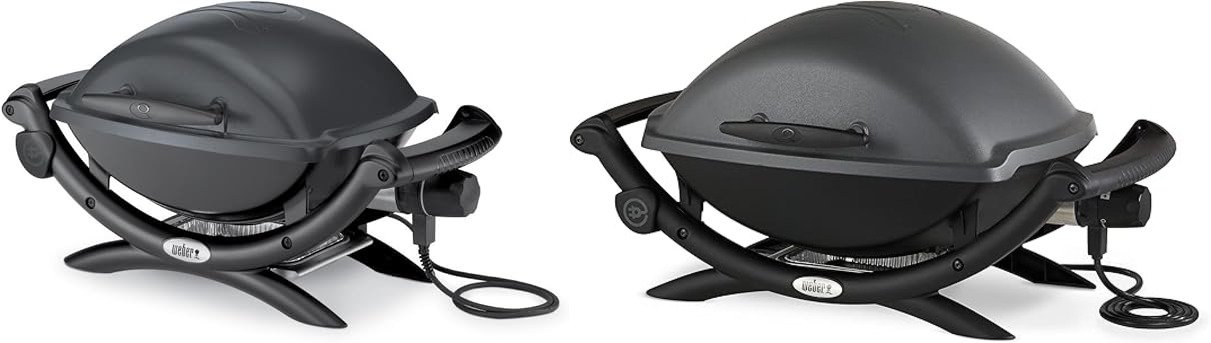
If you want the flavor of grilled food without charcoal, propane tanks, or messy smoke, the Weber Q1400 and Weber Q2400 are two of the best electric grills on the market. As someone who grills year-round on a small balcony and has tested both models side-by-side, I’ve learned that they cook very differently — even though they share the same 1560-watt heating element.
This guide breaks down everything you need to know based on hands-on experience, not just specs: heat output, flavor, portability, capacity, real-world cooking performance, and which model fits your lifestyle.
Main Difference Between Weber Q1400 and Q2400
At first glance, both grills look identical — same shape, same materials, same wattage. But in practical use, the difference comes down to one thing:
The Q2400 is bigger and holds more heat — the Q1400 is smaller and gets hotter faster.
The Q1400 is better for quick balcony meals. The Q2400 is better for families, dinner parties, and thicker cuts that need deeper heat penetration.
| Feature | Weber Q1400 | Weber Q2400 |
|---|---|---|
| Cooking Power | 1560 watts | 1560 watts |
| Cooking Area | 189 sq. in. | 280 sq. in. |
| Overall Size | 27” x 20.5” x 23.5” | 31.5” x 25.1” x 26” |
| Weight | 29 lbs | 42 lbs |
| Best For | Balconies + small meals | Families + larger servings |


1. Design & Build Quality
Both models share Weber’s signature cast-aluminum shell and porcelain-enameled grates — meaning they’re nearly bulletproof. After a full season outdoors, mine still look new.
The difference is size: the Q2400 is noticeably bulkier. If you grill on a small balcony, the Q1400 fits better and doesn’t dominate the space. If you have a patio or backyard table, the Q2400 feels perfectly at home.
Real-world note: When carrying the Q2400 up stairs, I immediately noticed the weight difference — almost 13 pounds. The Q1400 is much easier to lift and store.
2. Heat Performance & Temperature Control
Even though both grills use the same wattage, they don’t cook the same:
- Q1400 heats faster because the watt density is higher.
- Q2400 holds heat longer because the aluminum shell is larger.
When I cooked ribeye steaks on both, the Q1400 delivered a faster sear and darker grill marks — great for quick weeknight cooking. The Q2400 cooked more evenly across the surface, especially when grilling five or six burgers at once.
3. Cooking Capacity
If you cook for one to three people, the Q1400 is unbeatable. But if you want to cook a full meal without batch grilling, 280 square inches is a massive upgrade.
I found the Q2400 fits:
- 6 burgers + vegetables
- 3 ribeyes
- Full chicken thighs
The Q1400 handles smaller batches beautifully, but multi-item grilling takes more time.
4. Portability & Storage
This is where the models separate completely:
- Q1400 is light and portable — apartment-friendly
- Q2400 is heavier — best for a fixed location
My Q1400 stays on a rolling cart so I can move it after every use. My Q2400 stays parked permanently. Simple as that.
5. Cleaning & Maintenance
Both grills are extremely easy to clean thanks to porcelain grates and a removable drip tray. The Q1400 is faster to clean because the grate is smaller, but the Q2400 catches and contains more grease, making it ideal for bigger cooks.
6. Flavor & Cooking Experience
Electric grills don’t offer smoke like charcoal or propane, but Weber’s domed lid design traps steam and flavor. The Q2400 has a slight edge here because the larger dome creates better heat circulation — especially noticeable on chicken and salmon.
7. Energy Use & Cost
Both grills run on standard household power and cost pennies per meal to operate. No tank refills. No charcoal bags. No flare-ups.
8. Safety
The electric design eliminates open-flame hazards — which is why these grills are legal in places where gas and charcoal are banned.
Pros & Cons Comparison
| Weber Q1400 | Weber Q2400 | |
|---|---|---|
| Strengths | Compact, fast heat, affordable | Large surface, even heat, family cooking |
| Weaknesses | Too small for big meals | Heavy, less portable |
| Best For | Balconies + couples | Families + entertaining |
Which One Should You Buy?
After a full season of using both, my simple recommendation is:
Buy the Q1400 if:
- You grill for 1–3 people
- You have limited space
- You want fast heat
Buy the Q2400 if:
- You cook for 4+ people
- You want restaurant-style heat spread
- You want set-and-forget convenience
FAQ
Does the Q2400 get hotter?
No — both use the same wattage. The difference is heat retention and surface area.
Can these grills be used indoors?
No — they are outdoor-only electric grills.
Do you get real grill marks?
Yes — the cast-iron grates create excellent searing.
Final Verdict
The Weber Q1400 is the perfect small-space electric grill — compact, powerful, and fast-heating. The Weber Q2400 offers more cooking space and better heat distribution, making it the better long-term investment for families or frequent grillers. Either way, you get Weber’s legendary durability, real sear marks, and flavor that feels surprisingly close to gas grilling.
Leave a Comment