
Performance Overview
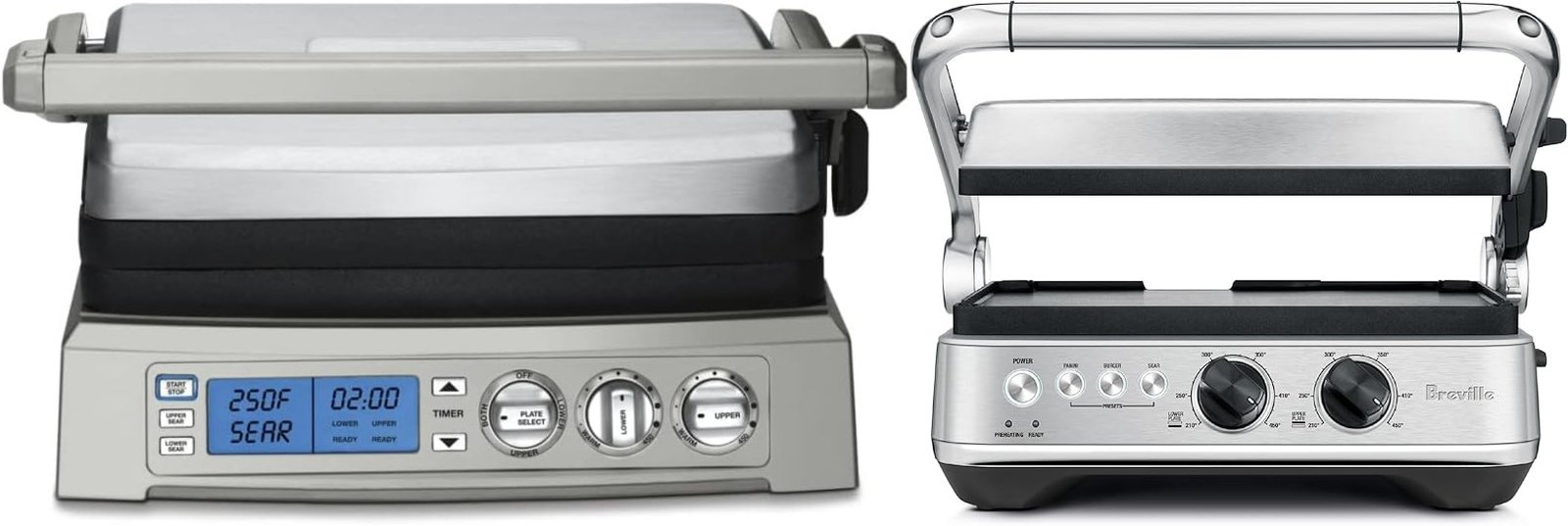
Where the Cuisinart pulls ahead is in high-temperature searing and multi-item versatility. Its dual-zone temperature control and 500°F sear function handle thick cuts better than the Breville, which focuses on preset simplicity and ceramic plate convenience.
| Feature | Cuisinart Elite (GR-300WS) | Breville Sear & Press (BGR700BSS) | Best For |
|---|---|---|---|
| Wattage | 1800W (500°F Sear) | 1800W (Preset Sear) | Cuisinart for steaks |
| Cooking Functions | 6-in-1: grill, griddle, panini, half grill/griddle, Top Melt | Panini, burger, sear, open-flat BBQ/griddle; preset-based | Cuisinart for versatility |
| Cooking Surface | 240 sq in | 230 sq in | Cuisinart for larger meals |
| Plate Material | Reversible non-stick, PTFE | Ceramic non-stick, PFOA/PTFE-free, top/bottom interchangeable | Breville for easy cleanup |
| Max Temperature / Sear | 500°F, dual-zone, Top Melt | Preset sear, lower max temp | Cuisinart for high-temp sear |
| Ease of Use | Flexible, learning curve | One-touch presets, beginner-friendly | Breville for convenience |
| Cleaning | Removable plates; dishwasher; grease tray maintenance | Ceramic plates; dishwasher; low maintenance | Breville for minimal cleanup |
| Portability | 16 lbs, stainless steel, bulky | 12 lbs, compact, vertical storage | Breville for small kitchens |
| Cord Length | 36 inches | 30 inches | Cuisinart for flexible counter placement |
| Max Sandwich Height | 3 inches | 2.5 inches | Cuisinart for thick paninis |
| Warranty | 3-year limited | 2-year limited | Cuisinart for peace of mind |
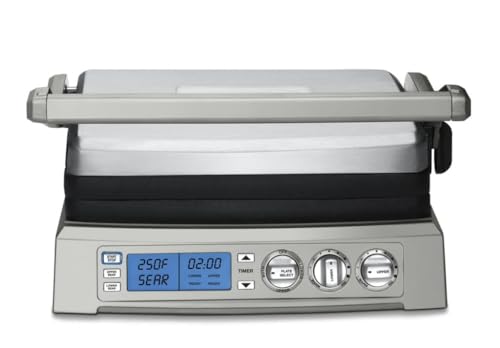
Cuisinart 6-in-1 Elite Griddler, Electric Grill, Griddle & Top Melt,...
- ENDLESS FUNCTIONS: Offering 6 cooking functions, the Cuisinart 6-in-1 Elite Griddler is a...
- CUSTOM CONTROLS: This electric grill features an LCD display to easily program temperature,...
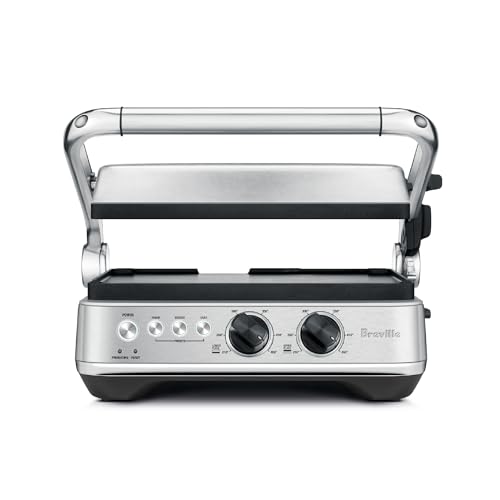
Breville BGR700BSS Sear and Press Grill, Brushed Stainless Steel
- The Breville Sear and Press Grill creates customized cooking environments to precisely grill...
- OPEN FLAT BBQ MODE: Open grill flat for a 240 square inch grilling and griddle surface; Grill...
Hands-On Testing Insights
A significant distinction noted during steak tests was recovery time. The Cuisinart’s dual-zone heating allowed me to sear at 500°F while keeping vegetables at 300°F. Breville required a short recovery period after placing cold items.
- Paninis: Cuisinart handles 3-inch thick sandwiches; Breville max 2.5 inches.
- Breakfast: Breville’s ceramic plates wipe clean in seconds; Cuisinart’s non-stick requires light scrubbing for stuck bits.
- Top Melt: Cuisinart melts cheese evenly for open-faced sandwiches and mini pizzas; Breville lacks dedicated Top Melt function.
- Timed Sear: Cuisinart maintains 500°F for 2 minutes, then stabilizes for even cooking.
- Plate Interchangeability: Breville’s top and bottom plates can swap, adding flexibility for cleaning and cooking orientation.
Practical Cooking Tips
- Use silicone or wooden utensils on Breville to avoid chipping ceramic plates.
- Preheat Cuisinart for 6 minutes to achieve perfect steak crust.
- Clean Cuisinart grease tray regularly to prevent smoke buildup.
- Top Melt works best for medium-fat cheeses; very hard cheeses may stick slightly.
- Breville’s compact design fits apartment counters; Cuisinart needs ~24-inch counter space.
Quick Pros & Cons Overview
Cuisinart GR-300WS
- Pros: 500°F sear, dual-zone temperature control, Top Melt feature, 240 sq in cooking surface, 3-year warranty.
- Cons: Bulky footprint, plastic-y knobs, learning curve for dual-zone, grease tray requires maintenance.
Check Price:
Cuisinart 6-in-1 Elite Griddler, Electric Grill, Griddle & Top Melt,...- ENDLESS FUNCTIONS: Offering 6 cooking functions, the Cuisinart 6-in-1 Elite Griddler is a...
- CUSTOM CONTROLS: This electric grill features an LCD display to easily program temperature,...
Breville BGR700BSS
- Pros: Ceramic non-stick plates, one-touch presets, top/bottom interchangeable plates, compact and portable, quick heat-up.
- Cons: Lower max sear temperature, ceramic can chip with metal utensils, max sandwich height 2.5 inches.
Check Price:
Breville BGR700BSS Sear and Press Grill, Brushed Stainless Steel- The Breville Sear and Press Grill creates customized cooking environments to precisely grill...
- OPEN FLAT BBQ MODE: Open grill flat for a 240 square inch grilling and griddle surface; Grill...
Frequently Asked Questions
- Can you buy waffle plates?
- Breville BGR700BSS has high-quality waffle plates sold separately. Cuisinart does not have official waffle plates.
- Is ceramic better than standard non-stick?
- Breville’s ceramic plates handle high heat and are easier to clean. Cuisinart’s PTFE plates are slicker for eggs but may show wear after years.
- Which grill is better for thick steaks?
- Cuisinart GR-300WS due to its 500°F sear and heavier build for even crust and cooking.
- Are both dishwasher safe?
- Yes, both have removable plates. Cuisinart’s grease tray still needs regular cleaning.
- How fast do they heat up?
- Cuisinart: 6:12 minutes to max sear; Breville: 7 minutes to preset sear.
Who Should Buy Which Grill?
- Cuisinart GR-300WS: Serious indoor grillers, families, or meal preppers who want dual-zone control, high-temp searing, and versatility.
- Breville BGR700BSS: Casual cooks, singles or couples, small kitchens, or anyone wanting quick, consistent meals with minimal effort.
Final Verdict After 30 Days of Testing
- Cuisinart GR-300WS: Offers power, versatility, professional-style grilling, Top Melt feature, and dual-zone heating. 3-year warranty ensures long-term reliability.
- Breville BGR700BSS: Simplicity, easy cleanup, compact footprint, and quick heat-up make it ideal for everyday meals and small kitchens.
Check Cuisinart Price:
Cuisinart 6-in-1 Elite Griddler, Electric Grill, Griddle & Top Melt,...
- ENDLESS FUNCTIONS: Offering 6 cooking functions, the Cuisinart 6-in-1 Elite Griddler is a...
- CUSTOM CONTROLS: This electric grill features an LCD display to easily program temperature,...
Check Breville Price:
Breville BGR700BSS Sear and Press Grill, Brushed Stainless Steel
- The Breville Sear and Press Grill creates customized cooking environments to precisely grill...
- OPEN FLAT BBQ MODE: Open grill flat for a 240 square inch grilling and griddle surface; Grill...
Leave a Comment