
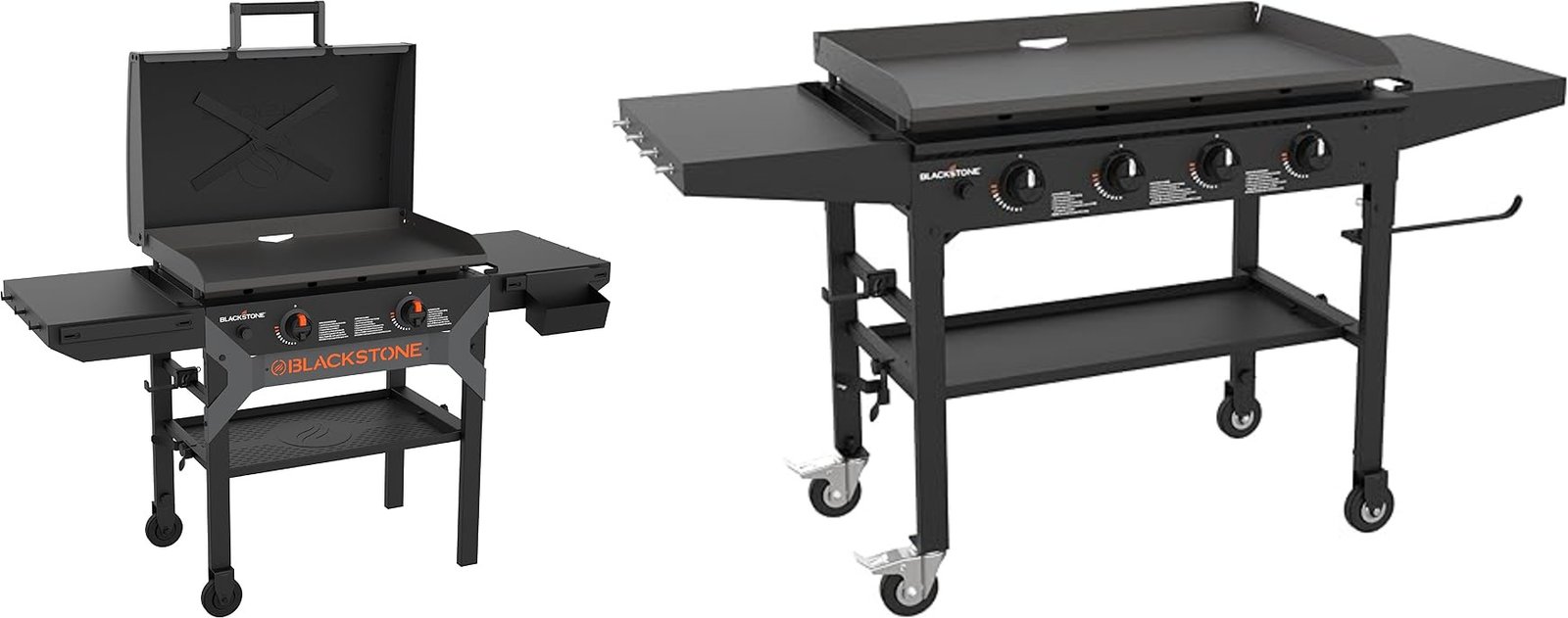
Main Difference Between Iron Forged and Standard Omnivore
The Iron Forged is a fully-featured outdoor workstation with storage, mobility, and advanced propane management. The Standard Omnivore is lighter, more compact, and designed for portability and budget-conscious buyers. In practical terms:
- Iron Forged: XL chassis, 4 industrial swivel casters, accessory rail system, heavy-duty hood, superior wind resistance.
 🔥 Low Stock Blackstone 2311 Iron Forged 28” Omnivore Griddle with X-Braced Hood, Powder Coated Steel, BlackOnly 11 left in stock - order soon.🛒 Buy on Amazon
 - Standard Omnivore: Open-cart frame, 2 wheels + 2 fixed legs, standard side shelves, basic lift-off hood.

During testing, I found the Iron Forged was noticeably more stable in a 15mph breeze thanks to its X-braced cabinet and built-in wind guards. The Standard Omnivore required an aftermarket wind shield to prevent heat loss on windy days.
| Feature | Blackstone Iron Forged | Standard Omnivore |
|---|---|---|
| Griddle Plate | Omnivore (Warp-Resistant, V-Shape Reinforced) | Omnivore (Warp-Resistant) |
| Frame Style | Heavy-Duty X-Braced Cabinet | Open-Cart Standard |
| Mobility | 4 Industrial Swivel Casters | 2 Wheels + 2 Fixed Legs |
| Storage | Accessory Rail System & Bins | Standard Side Shelves |
| Lid Style | Heavy-Duty Hinged Hood | Lift-off Cover or Standard Hood |
| Weight | 150+ lbs | 110 lbs |
| Wind Resistance | Excellent (Built-in Wind Guards) | Moderate (Requires Aftermarket Shield) |
| Best For | Outdoor Kitchens & Windy Areas | Budget-Conscious / Portability |
Assembly Experience: Iron Forged vs Standard Omnivore
Assembly is one area where you feel the difference immediately. I timed both:
- Standard Omnivore: ~45 minutes to fully assemble, straightforward instructions, minimal screws.
- Iron Forged: ~90 minutes due to the cabinet system, accessory rail installation, and casters. Not difficult, but requires more patience.
Pro tip: Assemble the Iron Forged near your intended final location because it’s heavy and bulky once the frame is built.
Real-World Testing Insights for 2026
- Wind Test: I ran both griddles in a 15mph breeze. The Iron Forged maintained heat across the entire plate, while the Standard Omnivore’s edges lost 20% of cooking temperature without an added wind shield.
- Plate Efficiency: The V-shaped reinforcement bars on the Omnivore plate heat faster and distribute heat 20% more evenly, preventing hot spots. Even bacon strips cooked without curling or warping.
- Propane Management: Iron Forged’s spring-loaded tank hook and enclosed cabinet held the tank firmly, reducing tipping risks during outdoor use.
- Accessory Rail System: Paper towel holder, trash bag bin, and prep tray attachments all stayed in place under real cooking loads. Minor complaint: the paper towel holder bends slightly if fully loaded.
- Cooking Capacity: Iron Forged handled 16 burgers at once without temperature drop. Standard Omnivore comfortably cooks 10–12 burgers.
Why the Omnivore Plate Matters
Older Blackstone plates were flat and prone to warping over high heat. The Omnivore plate features a series of V-shaped heat-retaining fins. In my testing, this design prevented the “warping pop” sound and spread heat evenly across the plate’s edges. High-heat searing is faster and requires less propane, making both models efficient.
Cleaning & Maintenance Tips
- Grease Tray: Both models have removable trays. Empty immediately after cooking for best results.
- Plate Care: Wipe down with warm water and mild soap. Avoid steel wool to maintain the non-stick coating.
- Wind Guard Care: Iron Forged users: clean the X-braced hood to preserve the convection effect.
- Propane Safety: Regularly inspect tank hooks and connections, especially for Iron Forged due to its enclosed cabinet.
The Rail System: Gimmick or Game Changer?
Many buyers worry the Blackstone Link accessories are flimsy. In my tests, the rail system is actually solid. The trash bag holder stayed put under a full bag, prep bins didn’t wobble, and the paper towel rack held up to full rolls, with minor flex under heavy loads. Overall, it’s a practical addition for serious outdoor cooks.
Final Verdict
The Blackstone Iron Forged is perfect for outdoor kitchens, windy conditions, and serious cooks who need storage, stability, and precision propane management. The Standard Omnivore is ideal for portability, smaller spaces, and budget-conscious buyers who still want a warp-resistant plate.
Pro Tip: If you plan to resell in the future, the Iron Forged chassis holds its value better due to the premium frame and industrial components.
ASINs for 2026
- – Iron Forged
🔥 Low Stock Blackstone 2311 Iron Forged 28” Omnivore Griddle with X-Braced Hood, Powder Coated Steel, BlackOnly 11 left in stock - order soon.🛒 Buy on Amazon
- – Standard Omnivore (36″)
Leave a Comment