
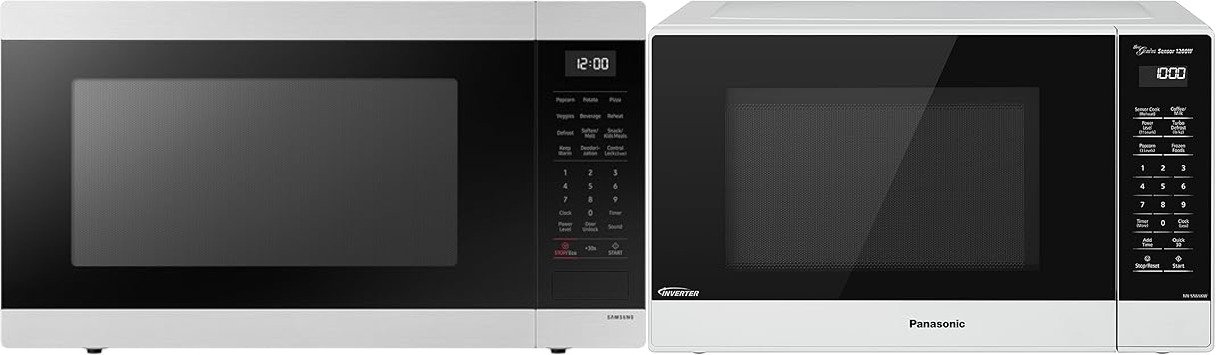
Quick Verdict: Choose the Samsung 1.9 cu. ft. (55L) if you want maximum internal space and easy cleaning for large meals. Choose the Panasonic 1.2 cu. ft. (32L) Inverter if you value even heating, better defrosting, and consistent cooking results.
Main Difference Between Samsung and Panasonic Microwaves
The biggest difference between Samsung and Panasonic microwaves is how they heat food and who they are designed for.
- Samsung focuses on larger capacity, durable interiors, and straightforward sensor cooking.
- Panasonic prioritizes precision through Inverter Technology, delivering more even heating in a compact size.
If size and cleaning convenience matter most, Samsung is the better fit. If food texture and even reheating matter more, Panasonic has the advantage.
The Real Difference: Inverter vs Standard Power
Most traditional microwaves use a simple method: full power on, full power off. This is how standard models, including many Samsung units, simulate lower power levels.
Panasonic Inverter Technology works differently. Instead of cycling power, it delivers a continuous, controlled level of heat.
- Panasonic advantage: Better defrosting, fewer cold spots, and less rubbery leftovers.
- Samsung advantage: Reliable performance for large portions and everyday reheating.

Samsung 1.9 cu. ft. (55L): The Large-Family Workhorse
The Samsung 1.9 cu. ft. microwave (often sold as ME6194ST or equivalent 55L models) is designed for households that cook and reheat large quantities of food.
- Capacity: 55 liters — easily fits large platters and casserole dishes
- Interior: Ceramic Enamel, which resists scratches and does not absorb odors
- Ease of Cleaning: Food splashes wipe off with minimal effort
- Warranty Highlight: Samsung commonly offers extended warranty coverage on its ceramic interior
This model is ideal if you frequently cook for a family or use oversized dishes.
Panasonic 1.2 cu. ft. (32L): Precision Heating in a Compact Size
Panasonic inverter microwaves such as the NN-ST series focus on performance consistency rather than sheer size.
- Capacity: 32 liters — compact and space-efficient
- Technology: Inverter + Genius Sensor automatically adjusts time and power
- Power Output: Typically 1100–1200 watts for faster, even cooking
This microwave is ideal for users who reheat leftovers, defrost meat, or cook delicate foods where even heating matters.
Samsung vs Panasonic: Side-by-Side Comparison
| Feature | Samsung (55L) | Panasonic (32L) |
|---|---|---|
| Heating Technology | Standard Sensor Cook | Inverter Technology |
| Interior Material | Ceramic Enamel | Easy-Clean Interior |
| Power Output | Approx. 900W | 1100–1200W |
| Voltage | 230V / 50Hz | 230V / 50Hz |
| Best For | Large meals, easy maintenance | Even reheating, precise defrosting |
Buyer Tip: Choose the Right Microwave Type
If you mainly reheat food or defrost frozen items, a Solo microwave like the models compared here is the most affordable and practical choice.
If you want to bake, grill, or roast, look for a Convection or Grill microwave instead.
Which One Should You Choose?
- Choose Samsung if you need maximum space, cook for a family, and want the easiest cleanup.
- Choose Panasonic if you care about food quality, even heating, and better defrosting results.
Leave a Comment