
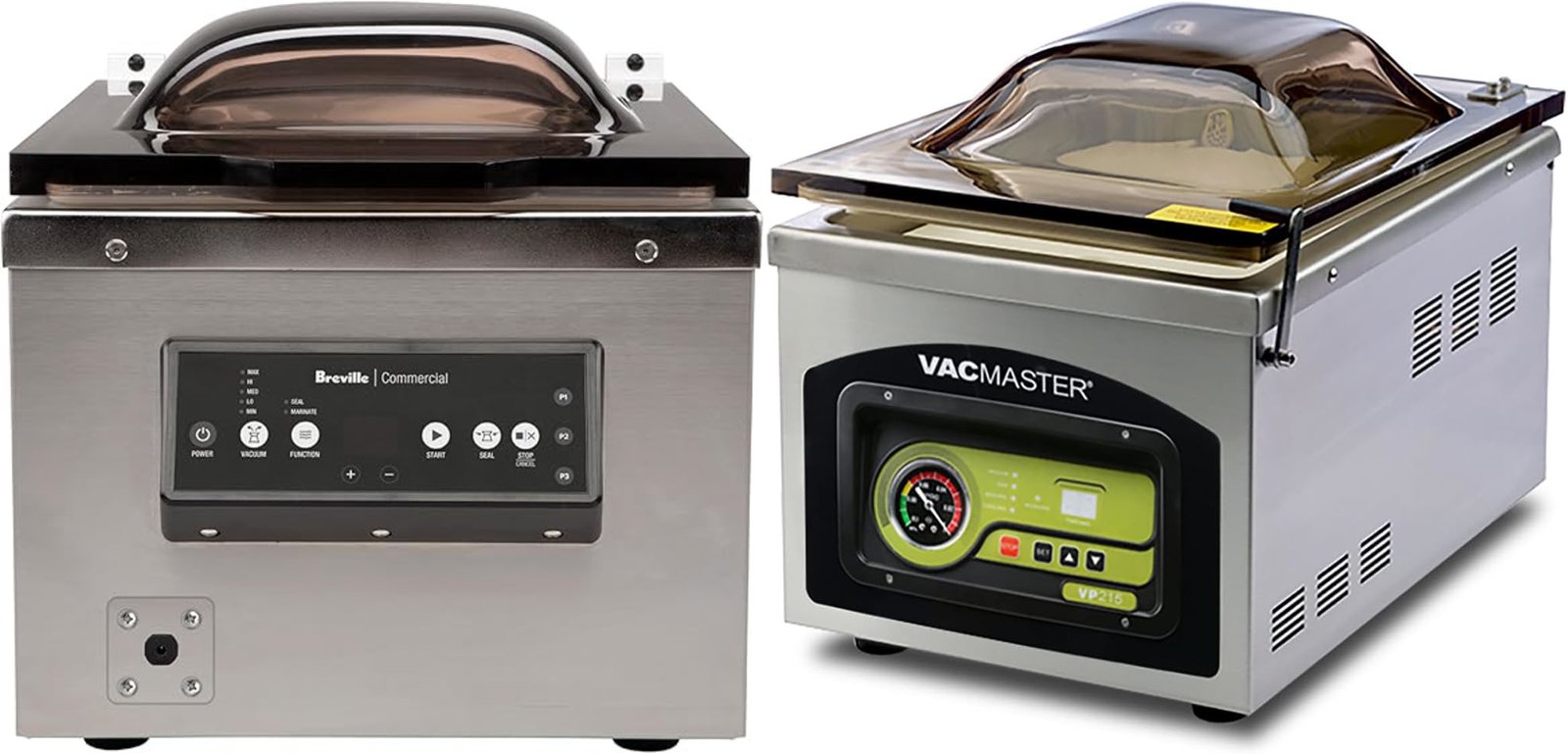
Choosing the right chamber vacuum sealer can be a game-changer whether you are a professional chef, a food preservation enthusiast, or a small business owner. Two popular models that dominate the market are the Polyscience 300 Chamber Vacuum Sealer and the Vacmaster VP215 Chamber Vacuum Sealer. Both are premium options designed to deliver exceptional sealing performance, but each has unique strengths that make them suitable for different users. In this detailed comparison of Polyscience 300 vs Vacmaster 215, we will dive into their features, build quality, usability, and performance to help you decide which one fits your needs best.
Main Difference Between Polyscience 300 and Vacmaster 215 Vacuum Sealer
The main difference between the Polyscience 300 and the Vacmaster 215 lies in their pump type and sealing power. The Polyscience 300 uses a dry piston pump, making it ideal for home or light commercial use, while the Vacmaster 215 features an oil rotary pump designed for heavy-duty, continuous sealing operations. This single distinction directly impacts their durability, vacuum strength, noise level, and maintenance requirements.
Comparison Table: Polyscience 300 vs Vacmaster 215 Vacuum Sealer
| Feature | Polyscience 300 | Vacmaster 215 |
|---|---|---|
| Main Pump Type | Dry Piston Pump (Maintenance-Free) | Oil Rotary Pump (Requires Oil Maintenance) |
| Chamber Size | 11.25” x 13” x 3.25” | 10.25” x 13” x 5” |
| Seal Bar Length | 12 inches | 10 inches |
| Vacuum Cycle Time | 25–40 seconds | 20–30 seconds |
| Pump Power | Maintenance-free, quiet operation | Powerful and consistent vacuum performance |
| Build Material | Stainless steel and polycarbonate lid | Full stainless steel construction |
| Weight | Approx. 55 lbs | Approx. 84 lbs |
| Usage Level | Home or small kitchen | Commercial kitchens and businesses |
| Noise Level | Low noise | Moderate noise due to oil pump |
| Maintenance | No maintenance required | Requires periodic oil changes |
| Price Range | Higher-end for home users | Mid-range for commercial performance |
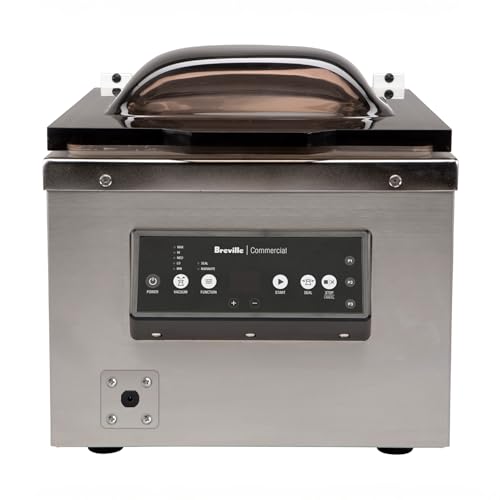
- Breville Commercial's 300 Series vacuum sealer machine excels at sealing dry foods and liquids...
- MARINATE AND PICKLE: Sealer allows you to combine steaks, meats and veggies with chilled...
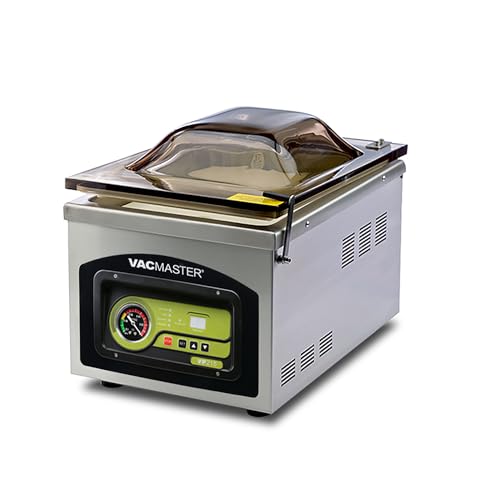
- Easy To Use Control Panel and Pressure Indicator - Perfect vacuum and seal with minimal effort...
- Quality At Home and Reliable for Your Business - With the compact design this vacuum sealer is...
Design and Build Quality
The Polyscience 300 stands out for its sleek, compact, and professional-grade design. It’s built primarily from stainless steel, with a durable polycarbonate transparent lid that allows you to monitor the sealing process. The intuitive control panel ensures precise vacuum control, making it perfect for chefs who require delicate sealing for sous-vide or liquid-rich foods.
On the other hand, the Vacmaster VP215 boasts a robust, all-stainless-steel construction that screams durability. It’s heavier and larger, but the added weight translates to stability during heavy-duty use. This model is often found in butcher shops, restaurants, and food packaging businesses where consistent performance is crucial.
Pump Type and Performance
The Polyscience 300 utilizes a dry piston pump — a technology that requires zero maintenance and offers whisper-quiet operation. This makes it ideal for home or small-scale use. However, it’s not designed for continuous, high-volume sealing sessions. Extended use may cause it to overheat or lose efficiency temporarily.
The Vacmaster 215, in contrast, features an oil rotary pump that provides a stronger vacuum and faster cycle times. This allows it to handle tough sealing jobs with ease — from sealing large cuts of meat to liquid-rich soups. The tradeoff is that it requires periodic oil changes to maintain its peak performance.
Ease of Use
Both vacuum sealers are user-friendly but cater to different audiences. The Polyscience 300 includes pre-set vacuum and seal settings ideal for precision sealing. It’s favored by home chefs and culinary professionals for sous-vide cooking due to its ability to handle delicate ingredients without crushing them.
The Vacmaster VP215 is slightly more technical but extremely reliable. Once you get accustomed to its interface, it’s easy to operate for repetitive commercial sealing. The oil pump ensures consistent vacuum pressure across long hours of use without losing performance quality.
Vacuum Strength and Efficiency
When it comes to vacuum strength, the Vacmaster 215 clearly has the upper hand. Its oil pump can reach a deeper vacuum level, often around 99.9%, ensuring that no air remains in the bag. This not only extends food shelf life but also helps preserve flavor and texture during storage.
The Polyscience 300 performs well but offers a slightly shallower vacuum due to its dry pump mechanism. It’s sufficient for most food sealing tasks, especially for those who prioritize cleanliness and quiet operation over industrial power.
Maintenance and Durability
Maintenance is a major factor in choosing between the two. The Polyscience 300 is virtually maintenance-free — you can plug it in and start sealing without worrying about oil changes or filter replacements. This convenience makes it ideal for users who prefer a hassle-free experience.
The Vacmaster VP215 requires regular oil checks and occasional oil changes to keep its pump in optimal condition. Although this adds a small maintenance burden, it pays off with longer lifespan and stronger suction performance over time.
- Breville Commercial's 300 Series vacuum sealer machine excels at sealing dry foods and liquids...
- MARINATE AND PICKLE: Sealer allows you to combine steaks, meats and veggies with chilled...
- Easy To Use Control Panel and Pressure Indicator - Perfect vacuum and seal with minimal effort...
- Quality At Home and Reliable for Your Business - With the compact design this vacuum sealer is...
Applications and Suitability
If you’re a home cook, food prepper, or small caterer, the Polyscience 300 is likely your best match. It provides professional-level results without the complexity or maintenance of commercial models. It’s perfect for vacuum-sealing sauces, marinated foods, and delicate items for sous-vide cooking.
Meanwhile, the Vacmaster 215 is tailored for businesses, butcher shops, or anyone needing to vacuum seal in bulk. It can handle wet and dry products, liquids, and even powders without compromise. For high-volume sealing or industrial kitchens, the VP215’s reliability is unmatched.
Noise Level and Operation
One of the advantages of the Polyscience 300 is its quiet operation. The dry piston pump produces minimal sound, making it ideal for domestic or office environments. The Vacmaster 215, however, operates with moderate noise due to its oil pump. It’s still quieter than external suction vacuum sealers but noticeably louder than the Polyscience model.
Price and Value
In terms of price, both are positioned in the premium range, but their target users differ. The Polyscience 300 typically costs more due to its brand reputation and specialized culinary applications. The Vacmaster 215 offers a slightly lower price point but higher output, making it an excellent value for business users.
Which One Should You Choose?
If you’re primarily cooking at home, experimenting with sous-vide, or preserving small batches, the Polyscience 300 is the perfect choice for you. It’s quiet, compact, and effortless to use with professional precision.
However, if your work involves frequent or commercial-level sealing — such as in restaurants, delis, or packaging facilities — the Vacmaster 215 will serve you better. Its oil pump design ensures long-term reliability and industrial-grade vacuum strength that the Polyscience can’t match.
Final Verdict: Polyscience 300 vs Vacmaster 215
When comparing the Polyscience 300 vs Vacmaster 215, it becomes clear that both models dominate their respective categories. The Polyscience 300 is best for home or light commercial users who value convenience and quiet performance, while the Vacmaster 215 is designed for heavy-duty, continuous use in professional environments.
Ultimately, the right choice depends on your workload, desired vacuum power, and maintenance preference. For culinary precision and simplicity — go with the Polyscience 300. For long-term durability and power — choose the Vacmaster 215.
- Breville Commercial's 300 Series vacuum sealer machine excels at sealing dry foods and liquids...
- MARINATE AND PICKLE: Sealer allows you to combine steaks, meats and veggies with chilled...
- Easy To Use Control Panel and Pressure Indicator - Perfect vacuum and seal with minimal effort...
- Quality At Home and Reliable for Your Business - With the compact design this vacuum sealer is...
Key Takeaways
- Polyscience 300: Maintenance-free, quiet, compact, ideal for sous-vide and home kitchens.
- Vacmaster 215: Oil pump, powerful, built for commercial and industrial use.
- Main Difference: Dry piston vs oil rotary pump determines their target users and performance levels.
- Verdict: Choose Polyscience 300 for home precision, Vacmaster 215 for business performance.
Final Thought: Whether you prioritize low maintenance or industrial strength, both the Polyscience 300 and Vacmaster 215 deliver outstanding results. With this detailed comparison, you can confidently pick the vacuum sealer that fits your culinary or commercial goals perfectly.
- Breville Commercial's 300 Series vacuum sealer machine excels at sealing dry foods and liquids...
- MARINATE AND PICKLE: Sealer allows you to combine steaks, meats and veggies with chilled...
- Easy To Use Control Panel and Pressure Indicator - Perfect vacuum and seal with minimal effort...
- Quality At Home and Reliable for Your Business - With the compact design this vacuum sealer is...
Leave a Comment