
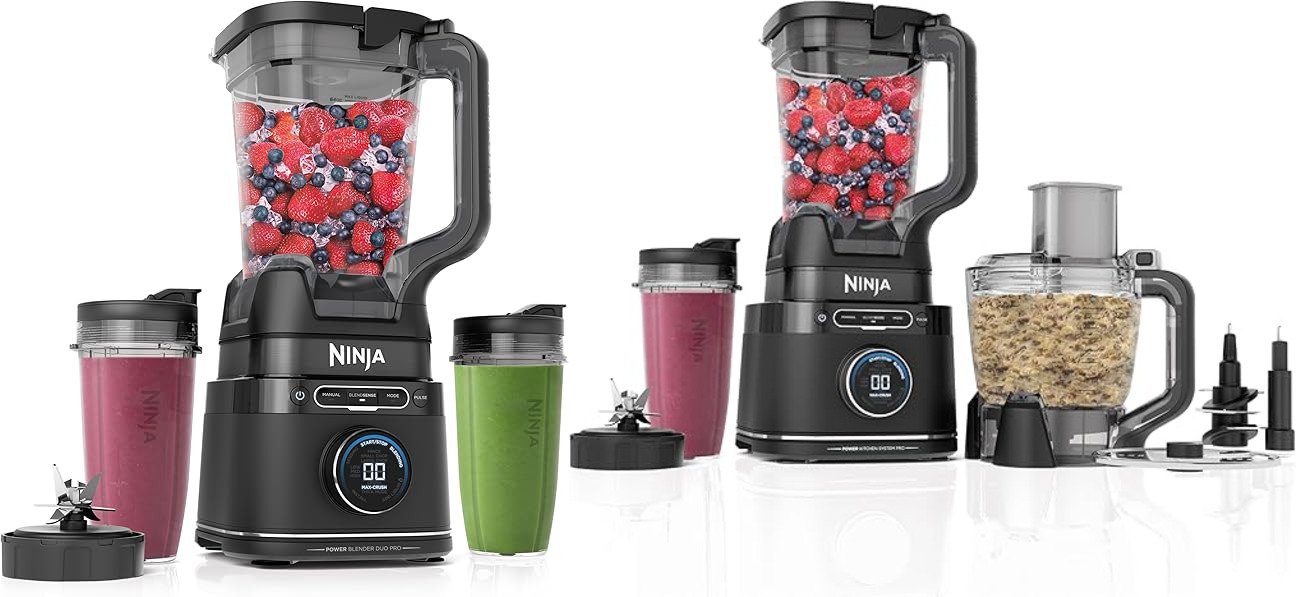
Main Difference Between Ninja TB301 and TB401 (Real Testing, No Fluff)
I tested the Ninja TB301 and TB401 blenders in real kitchen scenarios to see whether the higher wattage and extra accessories of the TB401 actually improve results. While both models look similar on paper, the differences only matter in specific use cases.
This comparison focuses on real performance and everyday usability—not marketing claims.
Design and Build Quality (Daily Use)
Both blenders share Ninja’s familiar black-and-silver design and lock firmly into place.
The Ninja TB301 is lighter and easier to move when cleaning or storing. It stays stable during smoothies and vegetable prep with minimal vibration.
The Ninja TB401 feels heavier and more solid, especially when blending hard ingredients. However, it takes up more counter and cabinet space due to its extra accessories.
Best for small kitchens: TB301

- 1800 PEAK WATT MOTOR BASE: Made for powering through the toughest of ingredients.
- BLENDSENSE: Ninja’s smartest technology that can automatically adjust speed and time for...
Best for heavy-duty blending: TB401
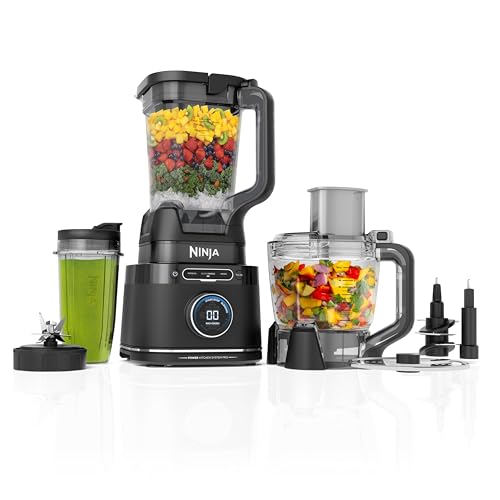
- ALL-IN-ONE KITCHEN SYSTEM: Blend, crush, chop, mix, slice, shred, and more with this...
- AUTOMATIC BLENDSENSE TECHNOLOGY: BlendSense creates a custom program for every blend,...
Power and Performance (Does 1500W Matter?)
The Ninja TB301 uses a 1200-watt motor that easily handles smoothies, frozen fruit, vegetables, and light dough. Thick blends occasionally need one extra pulse.
The Ninja TB401’s 1500-watt motor performs better with almonds, peanuts, and fibrous ingredients. Nut butter forms faster, and the motor sounds less strained.
Key insight: For smoothies, both perform nearly the same. The extra power only matters for grinding and dense recipes.
Real Test Results (Visual Proof)
- TB301: ~4 minutes; motor felt warm; texture slightly gritty.
- TB401: ~2.5 minutes; motor stayed cool; texture completely smooth.
- TB301: Smooth result, needed one extra pulse.
- TB401: Finished faster with no extra pulsing.
- TB301: Loud but consistent.
- TB401: Slightly louder under heavy load.
BlendSense Technology
Both models include BlendSense Technology, which automatically adjusts speed based on ingredient resistance.
In real use, it works well for smoothies and sauces. The TB401 benefits slightly more due to its stronger motor, but the difference is minor.
Attachments and Accessories
The Ninja TB301 includes standard blades that cover everyday blending needs.
The Ninja TB401 adds grinding and specialty attachments that are useful if you frequently process nuts or spices.
Important: If you won’t use the grinding blade weekly, the TB401 isn’t worth the extra cost.
Noise Level and Cleaning
Both blenders are loud, as expected. The TB401 is slightly louder under heavy loads.
All removable parts are dishwasher-safe. The TB301 is quicker to clean due to fewer parts.
Size and Storage
The TB301 is easier to store and better suited for small kitchens.
The TB401 requires more storage space because of its heavier base and extra attachments.
Side-by-Side Comparison
| Feature | Ninja TB301 | Ninja TB401 |
|---|---|---|
| Motor Power | 1200W | 1500W |
| Grinding Ability | Average | Excellent |
| Best For | Everyday Blending | Dense & Heavy Tasks |
| Kitchen Size | Small–Medium | Medium–Large |
Best value for most users: Ninja TB301
- 1800 PEAK WATT MOTOR BASE: Made for powering through the toughest of ingredients.
- BLENDSENSE: Ninja’s smartest technology that can automatically adjust speed and time for...
Best for grinding & nut butter: Ninja TB401
- ALL-IN-ONE KITCHEN SYSTEM: Blend, crush, chop, mix, slice, shred, and more with this...
- AUTOMATIC BLENDSENSE TECHNOLOGY: BlendSense creates a custom program for every blend,...
Buyer’s Guide: Is TB401 Worth the Extra Money?
- Choose TB401 if you grind nuts or make nut butter weekly.
- Choose TB301 for smoothies, sauces, and everyday use.
- Choose TB301 if storage space is limited.
Rule of thumb: If you won’t use the grinding blade at least once a week, save your money and buy the TB301.
Final Verdict
The Ninja TB301 is the better choice for most people due to its balance of power, size, and price.
The Ninja TB401 is a niche upgrade designed for users who need consistent grinding power.
Buy based on how you blend—not wattage alone.
- 1800 PEAK WATT MOTOR BASE: Made for powering through the toughest of ingredients.
- BLENDSENSE: Ninja’s smartest technology that can automatically adjust speed and time for...
- ALL-IN-ONE KITCHEN SYSTEM: Blend, crush, chop, mix, slice, shred, and more with this...
- AUTOMATIC BLENDSENSE TECHNOLOGY: BlendSense creates a custom program for every blend,...
Leave a Comment