
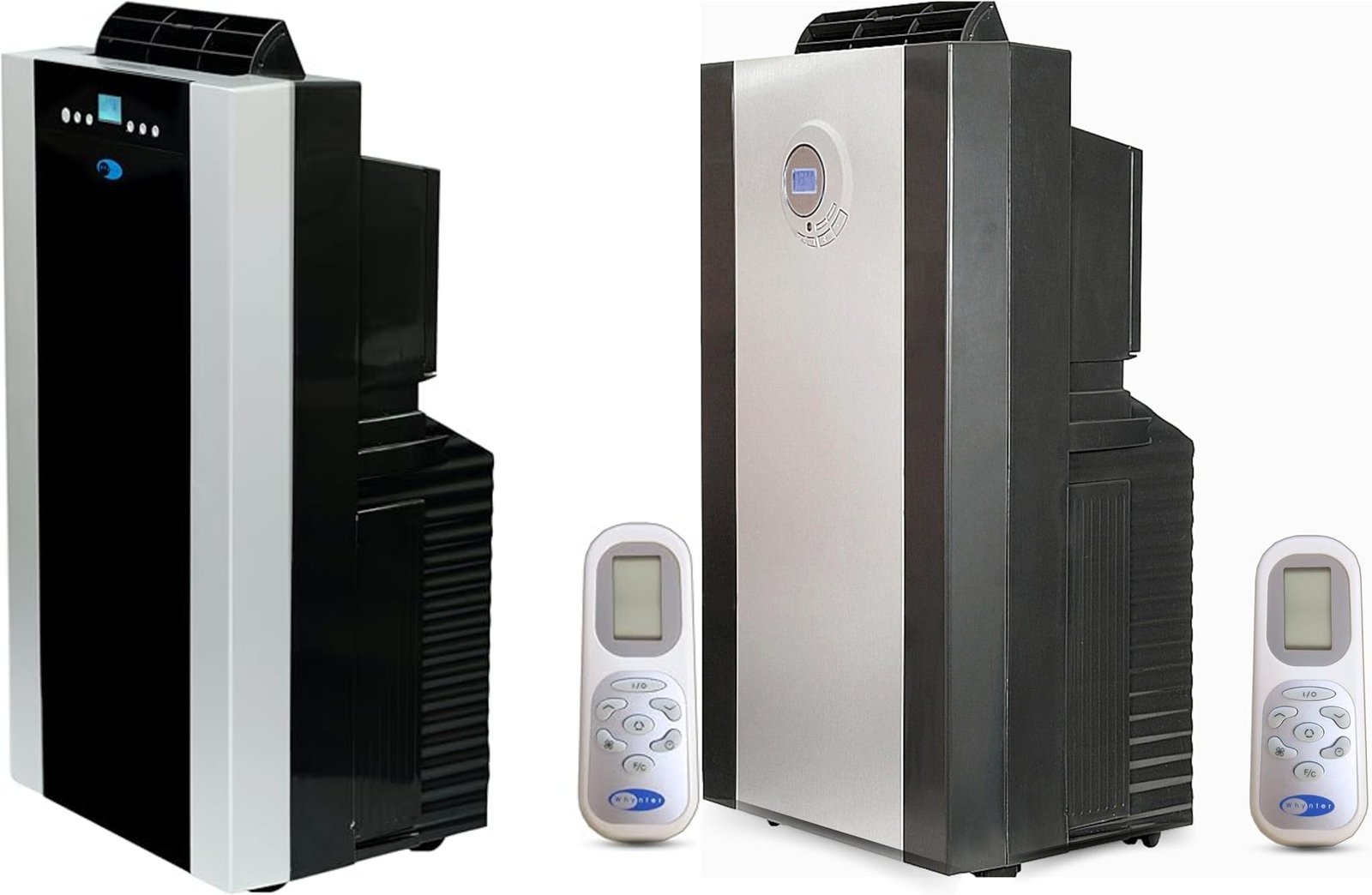
After running both units in a 12×15 ft upstairs bedroom with 8-ft ceilings during heat waves above 95°F, the ARC-143MX stood out for smoother operation and more stable cooling. Meanwhile, the ARC-14S delivered strong raw power but had a more noticeable “clunk” when the compressor engaged—especially disruptive at night.
Cooling Performance & HVAC Physics (Why Dual-Hose Matters)
The main difference in cooling between these two models lies not in raw BTU, but in how they manage airflow. Single-hose portable ACs create negative pressure, pulling warm air from outside back into the room through cracks and doors. Dual-hose units, like the ARC-14S and ARC-143MX, avoid this by pulling intake and exhaust air from outside, keeping room pressure neutral and improving efficiency.
During testing, the ARC-143MX delivered slightly more consistent cooling. Both units are rated at 9,500 BTU SACC, but the ARC-143MX maintains this efficiency longer because its 3M Antimicrobial filter keeps the internal coils cleaner than the ARC-14S’s washable mesh filter.
Diagram Alt Text: “Diagram showing how dual-hose portable AC prevents negative air pressure.”
Side-by-Side Comparison ARC-14S vs ARC-143MX
| Feature | Whynter ARC-14S | Whynter ARC-143MX |
|---|---|---|
| SACC Rating | 9,500 BTU | 9,500 BTU |
| Duty Cycle | Residential | Commercial / Continuous (Server Room Design) |
| Filter Technology | Washable SilverShield | 3M Antimicrobial HAF |
| Compressor Noise | Noticeable “Engagement Clunk” | Muffled / Steady Hum |
| Hidden Cost | None | $30–$50/year (filter replacement) |
| Drainage | Self-evaporative | Self-evaporative (hose included) |
| Max Water Removal | Up to 101 pints/day | Up to 91 pints/day |
| Best For | Budget buyers | Light sleepers & allergy sufferers |
Quick Links:
- Check ARC-14S Price
 Whynter Dual Hose Portable Air Conditioner, 14,000 BTU, 500 Sq Ft, ARC-14SCurrently unavailable.🛒 Buy on Amazon
 - Check ARC-143MX Price
The Main Difference Between ARC-14S and ARC-143MX Filters
The main difference in filter design impacts long-term performance. The ARC-14S uses a washable SilverShield mesh filter with no recurring cost, while the ARC-143MX uses a 3M Antimicrobial HAF filter. This filter captures finer particles and inhibits mold growth inside the unit, keeping coils cleaner for more consistent cooling.
- ARC-14S: Washable mesh, minimal maintenance, zero hidden cost.
- ARC-143MX: 3M Antimicrobial HAF, $23–$28 per replacement. Heavy use or dusty environments may require two per season (~$30–$50/year).
Noise and Nighttime Experience
The main difference in nighttime performance comes down to compressor and fan behavior. The ARC-14S makes a distinct “clunk” when the compressor cycles on, which can wake light sleepers. The ARC-143MX produces a smooth, steady hum, significantly less disruptive.
Both units feature an auto-restart function, so if there’s a 1-second power flicker in the middle of the night, they resume operation automatically—a crucial peace-of-mind feature in 2026 bedrooms.
Humidity and Drainage Considerations
The main difference here is subtle. Both units are self-evaporative, but in humid climates above 80%, manual drainage may be necessary. The ARC-143MX includes a hose to make this easier. The units can remove up to 101 pints (ARC-14S) or 91 pints (ARC-143MX) of water per day, which is useful for high-humidity areas or coastal homes.
Commercial Background: Why the ARC-143MX Excels
The main difference between the two units stems from the ARC-143MX’s server room heritage. Server room ACs are designed for 24/7 continuous duty, meaning the compressor, fan motor, and internal components are higher grade than residential-only units. This translates into:
- Steadier cooling under continuous operation
- Quieter, smoother compressor cycling
- Better air filtration and cleaner coils over time
Pros & Cons
ARC-143MX Pros
- Quieter at night with steady hum
- More consistent cooling for bedrooms
- Superior 3M Antimicrobial filtration
- Commercial-grade durability for continuous use
ARC-143MX Cons
- Filter replacement cost (~$30–$50/year)
- Higher upfront price than ARC-14S
Buying Tip (2026)
If the ARC-14S drops below $430, it’s an excellent budget-friendly option. If the ARC-143MX falls under $530, the quieter operation and improved filtration make it a compelling upgrade for light sleepers and allergy-prone users.
Who Should Buy Which?
Buy the ARC-14S if:
- You prioritize raw cooling power at a lower price
- You’re on a tight budget and don’t mind compressor noise
- Occasional use, not continuous overnight operation
👉 Buy ARC-14S
Buy the ARC-143MX if:
- You’re a light sleeper sensitive to compressor clunks
- You want superior air filtration for allergies or pets
- Continuous overnight cooling is needed
- You appreciate commercial-grade durability for long-term use
👉 Buy ARC-143MX

Frequently Asked Questions
Do both units deliver 9,500 SACC BTU?
Yes. Both are rated at 9,500 SACC BTU, but the ARC-143MX maintains consistent efficiency longer due to its 3M filter keeping coils cleaner.
Can either AC be used in high-humidity areas?
Yes, both units are self-evaporative, but in 80%+ humidity, manual drainage may be necessary. The ARC-143MX comes with a hose to simplify this process.
Is the ARC-143MX worth the higher cost?
For light sleepers, allergy sufferers, or anyone needing continuous overnight cooling, the quieter operation, better filtration, and commercial-grade components make the $100–$120 premium worthwhile.
Final Verdict
The main difference in real-world performance between the ARC-14S and ARC-143MX is experience. The ARC-14S delivers solid raw cooling power at a lower price, but the ARC-143MX provides quieter operation, more stable temperature control, and superior filtration for long-term comfort. For bedrooms, light sleepers, or allergy-sensitive individuals, the ARC-143MX is the recommended choice.
Ready to buy?
- Buy ARC-14S
Whynter Dual Hose Portable Air Conditioner, 14,000 BTU, 500 Sq Ft, ARC-14SCurrently unavailable.🛒 Buy on Amazon
- Buy ARC-143MX
Leave a Comment