
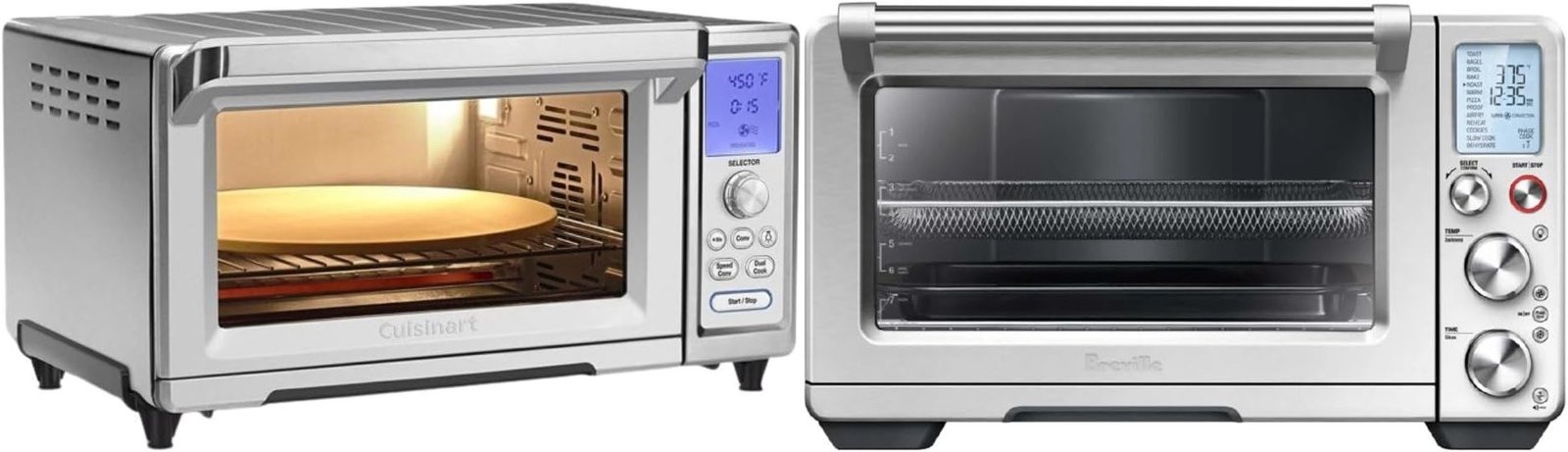
When choosing a high-performance countertop oven in 2025, two models dominate the discussion: the Breville BOV900BSS Smart Oven Air Fryer Pro and the Cuisinart TOB-260N1 Chef’s Convection Oven. Both deliver premium performance but target different users. This hands-on review compares air frying, convection baking, capacity, energy efficiency, and value to help you make the best choice for your kitchen.
Main Difference: Breville vs Cuisinart
The core difference lies in cooking technology and versatility:
- Cuisinart TOB-260N1 Chef’s Convection Oven focuses on precision convection baking using Exact Heat™ sensor technology and its unique Dual Cook feature.
- Breville BOV900BSS Smart Oven Air Fryer Pro is a true air fryer toaster oven combo, powered by Element IQ® and a high-speed Super Convection fan.
In testing, the Breville consistently produced faster cooking and crispier results, especially for frozen foods and roasted meats. Cuisinart excelled in consistent baking with Dual Cook at a lower price point.
Comparison Table
| Feature | Cuisinart TOB-260N1 Chef’s Convection Oven | Breville BOV900BSS Smart Oven Air Fryer Pro |
|---|---|---|
| Power | 1800W | 1800W |
| Cooking Functions | 15 (Dual Cook, Speed Convection) | 13 (Air Fry, Dehydrate, Proof, Roast, Bake) |
| Air Fry Mode | No (Speed Convection mimics) | Yes (True Air Fry) |
| Capacity | 13″ Pizza / 9 Slices | 14-lb Turkey / 9 Slices |
| Warranty | 3 Years | 2 Years |
| Price Category | Mid-range | Premium |
| Fan Noise Level | Moderate | High-speed, louder but faster cooking |
Cuisinart TOB-260N1 Chef’s Convection Oven interior showing Dual Cook feature
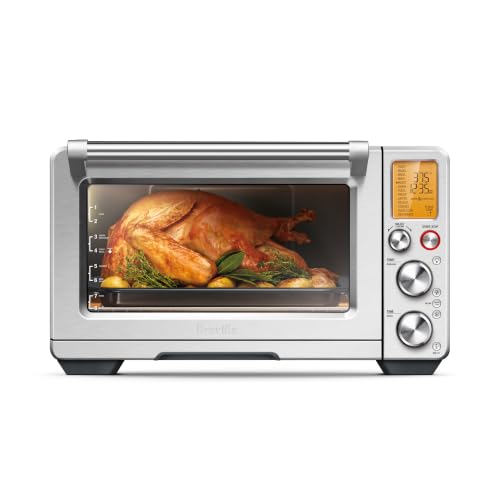
Breville BOV900BSS interior showing Air Fry capacity for 14 lb turkey

Air Frying & Convection Performance
Breville BOV900BSS – True Air Fryer
In real-world testing, 1 lb of frozen fries cooked in 14 minutes, evenly browned without flipping. The Super Convection fan reduces cook time by up to 30% compared to standard convection ovens. Ideal for:
- Air frying
- Roasting meats
- Dehydrating fruits
- Reheating without sogginess
Cuisinart TOB-260N1 – Precision Convection
The Cuisinart excels at consistent baking. Toast tests scored 5/10 evenness versus Breville’s 7/10. Dual Cook automatically switches modes, perfect for casseroles, lasagna, and baked desserts. Real-world tip: Sourdough crust can rise and brown perfectly using the Dual Cook sequence.
Cooking Capacity
Breville comfortably fits a 14-lb turkey, while Cuisinart fits a 13-inch pizza and standard bakeware. Breville is ideal for batch cooking; Cuisinart suits everyday meals and family baking.
User Interface & Build Quality
- Cuisinart: Simple button-based controls, easy to learn.
- Breville: Premium LCD with dial navigation, real-time feedback.
Breville feels heavier and more solid; Cuisinart is more straightforward for minimalistic users.
Energy Efficiency
Both run at 1800 watts, but Breville’s faster cook times result in slightly lower overall energy use during frequent air frying.
Who Should Buy
- Cuisinart: Users who want consistent baking, dual cook flexibility, and value for money.
- Breville: Users who prioritize air frying, large batch roasting, or multi-function versatility.
Pros & Cons
Cuisinart TOB-260N1 Chef’s Convection Oven
- Pros: Excellent value, Dual Cook, even baking, 3-year warranty
- Cons: No true air fry mode, manual crumb tray cleaning
Breville BOV900BSS Smart Oven Air Fryer Pro
- Pros: True air fryer, super convection, premium build, versatile functions
- Cons: Expensive, large footprint, louder fan noise
Final Verdict
Choose Cuisinart TOB-260N1 for reliable, affordable convection baking and long-term durability. Ideal for everyday meals and consistent results.
Choose Breville BOV900BSS for the ultimate air fryer toaster oven experience, faster cooking, and multi-function versatility. The extra speed and true air frying justify the premium price for tech-focused users.
Bottom line: Cuisinart wins on value and Dual Cook convenience; Breville wins on air frying performance and large-capacity versatility. Warranty difference (3 vs 2 years) may be the deciding factor for many buyers.
Leave a Comment