
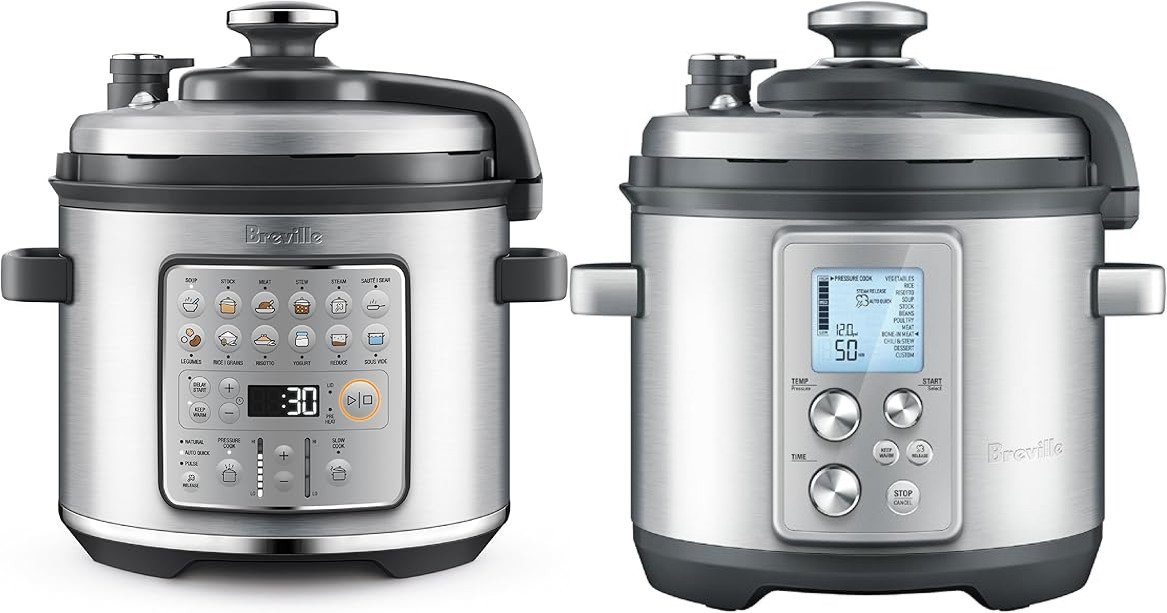
If you’re choosing between the Breville Fast Slow GO and the Breville Fast Slow Pro, you’re not deciding between “good” and “bad” — you’re deciding between simplicity and precision. After comparing their steam-release systems, bowl materials, and real-world cooking behavior, here’s what actually separates these two 6-quart pressure cookers.
Main Difference Between Breville Fast Slow GO and Fast Slow Pro
The real difference isn’t the presets or the wattage — it’s how much control and safety you want
after the cooking is done. The Fast Slow Pro uses a fully hands-free automatic steam release system
(Natural, Pulse, or Quick), while the Fast Slow GO requires you to manually turn the pressure release knob.
That single difference affects safety, noise, and convenience more than any screen or preset count.
Overview: Breville Fast Slow GO (BPR680)
The Fast Slow GO is designed for cooks who want strong performance with minimal complexity.
It relies heavily on presets and manual control, which many users prefer for everyday meals.
- Capacity: 6 quarts
- Power: 1100 watts
- Bowl: Stainless steel (durable, but food can stick with rice)
- Steam Release: Manual knob
- Best For: Yogurt, rice, soups, stews, quick weeknight meals


In real use, the GO feels straightforward and reliable.
Users frequently choose it for yogurt and grains because the presets remove guesswork.
The trade-off is less feedback during cooking and a more hands-on steam release at the end.
Overview: Breville Fast Slow Pro (BPR700)
The Fast Slow Pro is aimed at cooks who want visibility and refinement.
It provides real-time feedback and automates the most stressful part of pressure cooking:
steam release.
- Capacity: 6 quarts
- Power: 1100 watts
- Bowl: Ceramic-coated (less sticking, easier rice cleanup)
- Steam Release: Fully automatic (hands-free)
- Display: LCD showing pressure, temperature, and countdown
In everyday cooking, the Pro feels calmer.
The cooker automatically releases pressure at the end of a cycle, often with a noticeable
“pulse-release” sound that’s quieter and safer than manual venting.
This is a major advantage for beginners and for anyone cooking frequently.
Real-World Testing Differences That Actually Matter
Rice & Grains Test
The Pro’s ceramic bowl consistently releases rice more cleanly with less sticking.
The GO’s stainless bowl performs well but often needs soaking after rice or risotto.
Steam Release & Safety
This is the biggest deal-breaker.
With the GO, you must manually turn the release knob — fine for experienced users,
but intimidating for new ones.
The Pro handles this automatically, choosing the safest release method for the food inside.
Noise & Kitchen Comfort
The Pro produces a controlled “whistle” during auto-release.
The GO is quieter during cooking but louder and more abrupt when manually venting.
Fast Slow GO vs Fast Slow Pro: Comparison Summary
| Feature | Fast Slow GO | Fast Slow Pro |
|---|---|---|
| Steam Release | Manual (you turn the knob) | Automatic, hands-free |
| Bowl Material | Stainless steel | Ceramic-coated |
| Display | Basic controls | Full LCD feedback |
| Typical Price | Lower | Higher (premium tier) |
| Best For | Simple, preset-based cooking | Precision & safety-focused cooks |
Which One Should You Buy?
Choose the Fast Slow GO if you want dependable performance, lots of presets,
and don’t mind manual steam release.
It offers excellent value and handles everyday meals effortlessly.
Choose the Fast Slow Pro if safety, cleanup, and cooking visibility matter to you.
The automatic steam release alone makes it worth the upgrade for frequent pressure cooks.
Final Verdict
The Fast Slow GO is about convenience.
The Fast Slow Pro is about confidence.
Both are excellent — but if you pressure cook often, the Pro’s hands-free steam release
is the feature you’ll appreciate every single time.
Leave a Comment